CLICK HERE FOR FREE BLOGGER TEMPLATES, LINK BUTTONS AND MORE! »

Pages

Wednesday, January 4, 2012

Geometry Project

Thank you to CINDY over at love2learn2day for linking me in the teaching blogging community. If you haven't been over to visit her blog, it's an awesome resource and I am posting this post for the "Math Box Monday" :)

This is a project I usually do in the winter right after Christmas break to ease us into school again. It's a FUN project that allows students to use their creativity while exploring new/old geometry concepts.

Time Allotment:
- 1 week (or more)

Concepts Covered:
- Intersecting, Parallel & Perpendicular Lines
- Acute, Right, Obtuse & Straight Angles
- Polygons
- Polyhedrons

Procedure:
The first two days are spent working on the Geo-Map and the last two days are spent working on the Geo-Bug. Their only homework during this time is to work on these projects so that they are AWESOME on Friday.

Geo-Map:
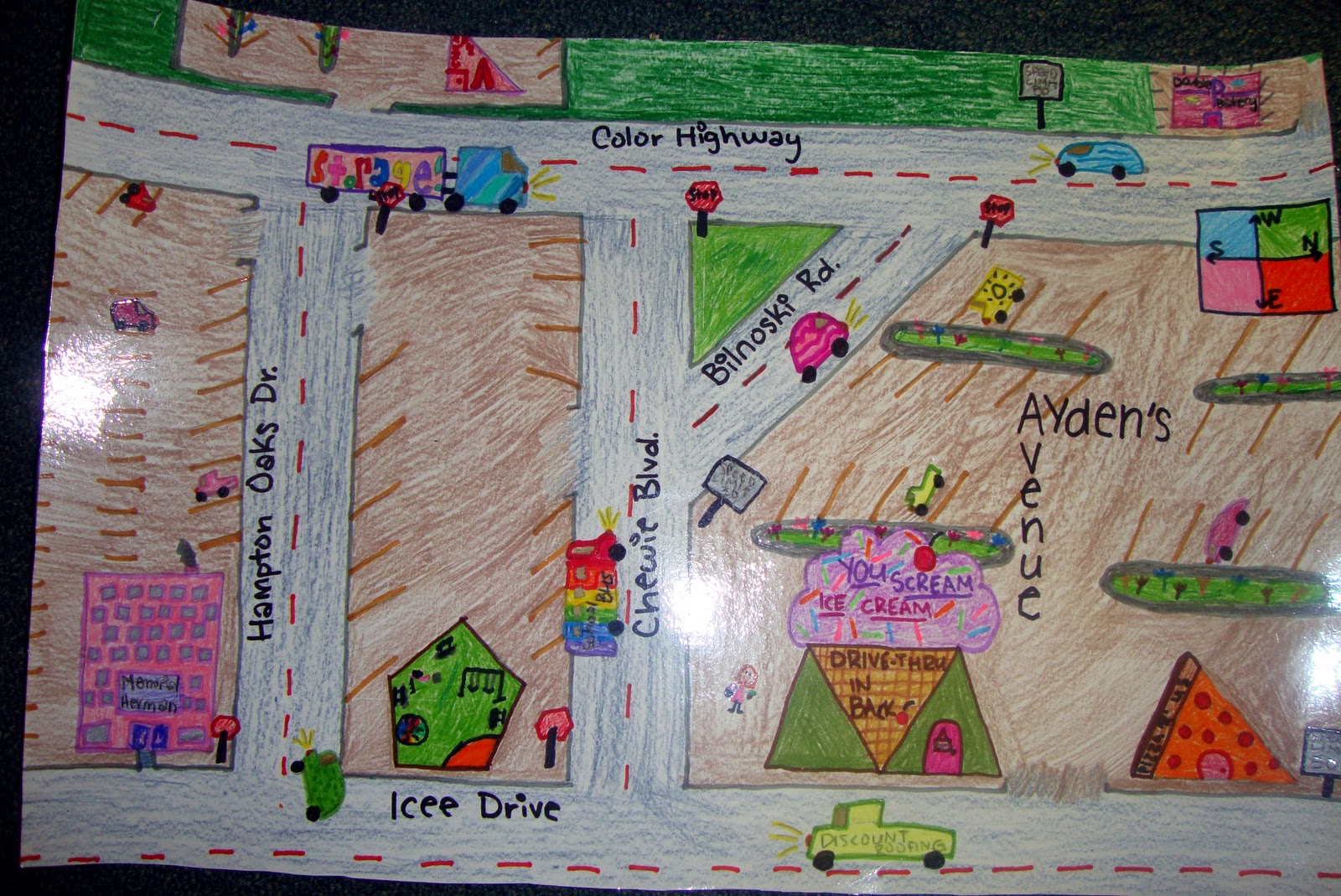
Students will design a city that incorperates many 2-D geometric properties such as lines and polygons. Have students draw their whole city in pencil first and then color it.
Geo-Bug:
Students will design a 3-D geometry bug based on polyhedra that has been covered. Students will give the bug a name, describe its features and habitat.
"Geopillar" circa 2010
Uses spheres, trapezoidal wings, rectangular prisms for legs and triangular prisms for antenna

Directions for Geo-Bug and Geo-Map: $4


I hope this is a great project for your classroom! I know my students LOVE this one and it is anticipated every year from the start of school!

Monday, January 2, 2012

Scavenger Hunt Revisited {Review Game}

I had posted this once before, but thought it needed a "repost" with some different pictures :)
{Link to original post}
**excuse the crumby photos, I had forgotten my camera and took them with my old phone!**

Time Period:
1 class period (60 or 90 mins) - you can adjust the length according to your plans. More cards = more time,

Materials:
  • Index Cards (1 for each question you plan on covering) - I usually do 20 for an hour's time
Procedure:
  1. Decide on how many questions you are wanting to use. I say anywhere between 15 and 20 questions is good for an hour's worth of time. This is a great time to add in that spiral review too!
  2. BEFORE class, write a numerical sequence that is OUT OF ORDER. This is your "key" to know if the students have solved the questions correctly. Make sure your last number and your first number are the same. (This allows you to start your groups out at different places and always end up back where they started!)
  3. Take the first number on your list (In my case, 7) and your first index card. Write in the upper left hand corner "card ____" . In the upper right hand corner write A: (but leave it blank for now. This is where the answer for the last card on your list will go. In my case, it would be card #13) In the middle of your card write the problem you wish your students to solve. Here's an example of a completed card:
  4. This is card #10 which has the answer to card #19 on it. The answer to this is on card #25.
  5. On the next card, repeat; only label it with the next card in your sequence. Place the answer to the previous card in the answer spot and come up with a new question. Repeat until all your cards and questions are used up.
    *Note: I do not put word problem labels on purpose because I want students to actually solve it, not just look for the label.
  6. Before class, place your index cards all over the room - we're talking on the backs of chairs, doors, tables, on walls, where ever! It really gets my students to LOOK too and become more observant! Be sure not to place them in order too. You want them not walking in a circle b/c they will catch on.
  7. Put students into groups and give each member a job. I assign the following jobs: Scout (the one that goes looking for the next card), Task Master (the one that solves the problems), Checkmate (the one that double checks the work of the Task Master), and the Record Keeper (the one that writes down the sequence of the cards)
  8. Assign each group a starting point. Since the sequence makes a loop, it doesn't matter where you start, you'll know you're finished bc your last card will lead you back to where you started!

  9. The first team that finishes with the correct sequence gets 5 points extra credit and a "small but fabulous prize". Each team that finishes after them also will get a "small but fabulous prize", but no extra credit.

Have a great "Scavenger Hunt" and leave a comment on how you enjoyed this in your classroom! :)